Showing posts with label CSA. Show all posts

Sunday, 25 August 2013

Sharing Farm Garlic Festival

This Sunday my family and I spend time at the Terra Nova Sharing Farm for their 5th Annual Garlic Festival. I have had this date marked on my calendar for months in eager anticipation. I like spending time at the Sharing Farm and supporting the good work that they do for my community, growing in season local produce for the food bank. I love garlic more than I can express, and I look forward to sampling the garlic treats they make at the farm each year - garlic ice cream, roasted garlic and garlic bread. This year did not disappoint because they had enough activities to keep all ages interested, with music, crafts, food, and workshops.

I made a beeline for the garlic ice cream, which we unfortunately missed out on again this year. Luckily we managed to get some salted caramel ice cream just before that sold out, too. Next I had to check out the market with goods produced at the Sharing Farm: honey, dried herbs,  lavender bath salts, vegetables, plants, and more. I bought honey from their own beehives, which they increased this year with a grant. One of the volunteers shared with us their plans for expanding the types of flowers they plant to attract more bees to increase production.


Of course I bought garlic! Last year I planted garlic in my garden from both West Coast Seeds and the Sharing Farm, but I think the Sharing Farm garlic did better because it was grown in my specific area and well suited to the growing conditions. I loaded up with $25 worth of both soft and hard neck varieties. I loved the garlic scapes from my garden last year, from the hard neck varieties I grew, but I would really like to do some garlic braids, which require the soft neck garlic.

We watched a braiding demonstration where these beautiful garlic braids were made.

We didn't get a chance to try out the garlic treats being prepared by the cob oven (roasted garlic and garlic bread) because of the long lineups. There is no way my youngest would survive a long wait. There were several how-to workshops that I would have enjoyed attending if I didn't have wee ones in tow.

I am so pleased to see all that the Sharing Farm does to promote local, organic food, but also how to make environmentally friendly choices.

The City of Richmond water station, which encourages people to
drink our high quality tap water and fill up reusable water bottles.

There was a kid friendly area of eco-minded activities to complete to earn stamps toward a smoothie and gummy treats. These included upcycling crafts, matching game with trivia about green transportation choices, and a recycling race. The craft activity has inspired my girls, and as I type this I can hear them going through my recycling materials in my kitchen and making more crafts. My favourite part was watching the volunteers make the fruit smoothies with a pedal power blender.


In the other activity area my girls enjoyed the 4Cats art activities, which included a spinning paint craft, and participating in a group painting of Vincent Van Gogh's "Starry Night". I geeked out a bit because last night we watched the Doctor Who episode where the 11th doctor and Amy meet Van Gogh.


I think my girls' favourite activity was braiding garlic necks to make garlic crowns. We noticed some boys making garlic neck swords, which I thought was a cute idea. What a great way to make use of all parts of the plant!

Before we left we had fun in the hay pile and I saw a photo opportunity. 

It was fun running into people I know and getting caught up on our summer's events.

Before we left, we wandered around the Sharing Farm garden, and various community and school gardens to compare what they were growing to our garden at home. We have made a list of a few things we would like to try growing next year. Check out the amazing bean towers!


This year seems even bigger than last year, with bigger crowds than I remember. I really appreciated how the Sharing Farm and their sponsors handled all the added people by having valet bike parking, and a bus shuttle from the city works yard by the dyke to alleviate the parking and traffic congestion.

I'm already looking forward to next year's garlic festival. We'll have to go nice and early to get the garlic ice cream!


Wednesday, 19 September 2012

Community Supported Agriculture: A Win For All

In my community we have strong historical roots to agriculture. Richmond's largest crop is cranberries but blueberries, potatoes, corn, raspberries and many other crops are grown each year in local farms. I grew up in a neighbourhood next to the Bissett family's blueberry farm that is now on Westham Island in Delta, and to make money each summer my friends and I would pick blueberries from the wild bushes in the nearby bog and sell blueberries in ice cream buckets to neighbours. Many of our neighbours' parents worked on the blueberry farms as pickers. One of my favourite childhood memories of growing up in Richmond was doing our weekly produce shopping at the roadside stands of family run farms along Steveston Hwy and No. 5 Road instead of big chain grocery stores. In university I worked for a season as a cashier at Richmond Country Farms, located off Steveston Hwy near the George Massey Tunnel. We continue this tradition with our children visiting many favourite farm stands.
Apples at the Terra Nova Sharing Farm

One of dichotomies of today's society is that we have needy families in a land of plenty. I am a teacher and I see students come to school without breakfast and often without lunches. Children cannot learn, cannot function, without food in their bellies, which is why some schools, like mine, have a breakfast program and also provide lunches to those in need.

The Terra Nova Sharing Farm, close to the middle arm of the Fraser River, near the Vancouver International Airport, grows food for the food bank to provide needy families with fresh, local, in season produce. They also promote sustainability in the community through workshops on organic farming and practices, promote community building with a strong volunteer program as well as food security awareness.

As a family we have always enjoyed going to the festivals and events that the Sharing Farm has held but I became more interested in the Sharing Farm through a high school friend who has been involved with the farm and in the community as food security activist for years. She has recently moved to Vancouver Island to pursue her dreams of an organic farm. It is through her posts on social networking sites that I found out about the Sharing Farm's Community Supported Agriculture. Some spots opened up this year and we jumped at the chance to share in this year's harvest while also supporting the good work that the Sharing Farm does to support those in need.
Three different weeks' CSA veggies

We paid for our portion of the harvest early in the year, then starting the beginning of July we had a weekly share of the harvest that we picked up at the farm each Thursday. This week marks the last CSA pick up for the season. There are weeks where we were in a hurry, but usually my daughters and I enjoyed walking around the farm and community gardens.
Community garden plots at Terra Nova

My daughters' favourite on these weekly visits is a stop at the chicken coop. We dearly wish our city allowed backyard chickens, but alas it is not the case right now.
The chickens out of their coop, getting some fresh air

When we have more time we have walked around the Terra Nova natural area, a former farm that has been fallow for decades.

My favourite thing to do on these visits is to take photos.

The Sharing Farm is a wonderful place to connect with nature and people in the community.
One of the bee hives at the Sharing Farm

 A friend's son participated in a volunteer program at the farm where they partner teenagers with seniors.
The cob oven at the Sharing Farm

My oldest daughter wanted to attend a week long day camp for children eight and up to learn about growing, harvesting and cooking for but we had already booked a family holiday for the same time. She hopes to attend next year. Maybe it will motivate me to walk the walk and volunteer as well.
The CSA pick-up stand on Westminster Hwy 

They also have a market stand on Saturdays for the general public to purchase a portion of the weekly harvest.

I highly encourage others to seek a community shared agriculture program in their area, donate to local sustainability programs, grow on a plot in a community garden or just walk around a local rural area with your family and enjoy the sights, sounds and smells it has to offer.
Bergamot 


Wednesday, 12 September 2012

Garden Reflections 2012

The growing season is quickly coming to an end. I can feel the nip in the air in the morning and evening, and we have to remember to take a hoodie or light coat when we head out the door. As much as I will miss summer, I am excited about the changing colours of the leaves, the smell of pumpkin spice and pulling out my favourite sweaters again. We are crazy for Hallowe'en in my family, which is a close second to Yule and Christmas. If I were being honest with myself, I think autumn may be my favourite season.

But I am sad to say good bye to my veggie garden for another year. This was my second summer with full garden beds in a backyard (container gardening in our townhouse in years prior) so I am a newbie and don't think of myself as a gardener yet. But I am starting to get my "sea legs" and figure things out through trial and error.

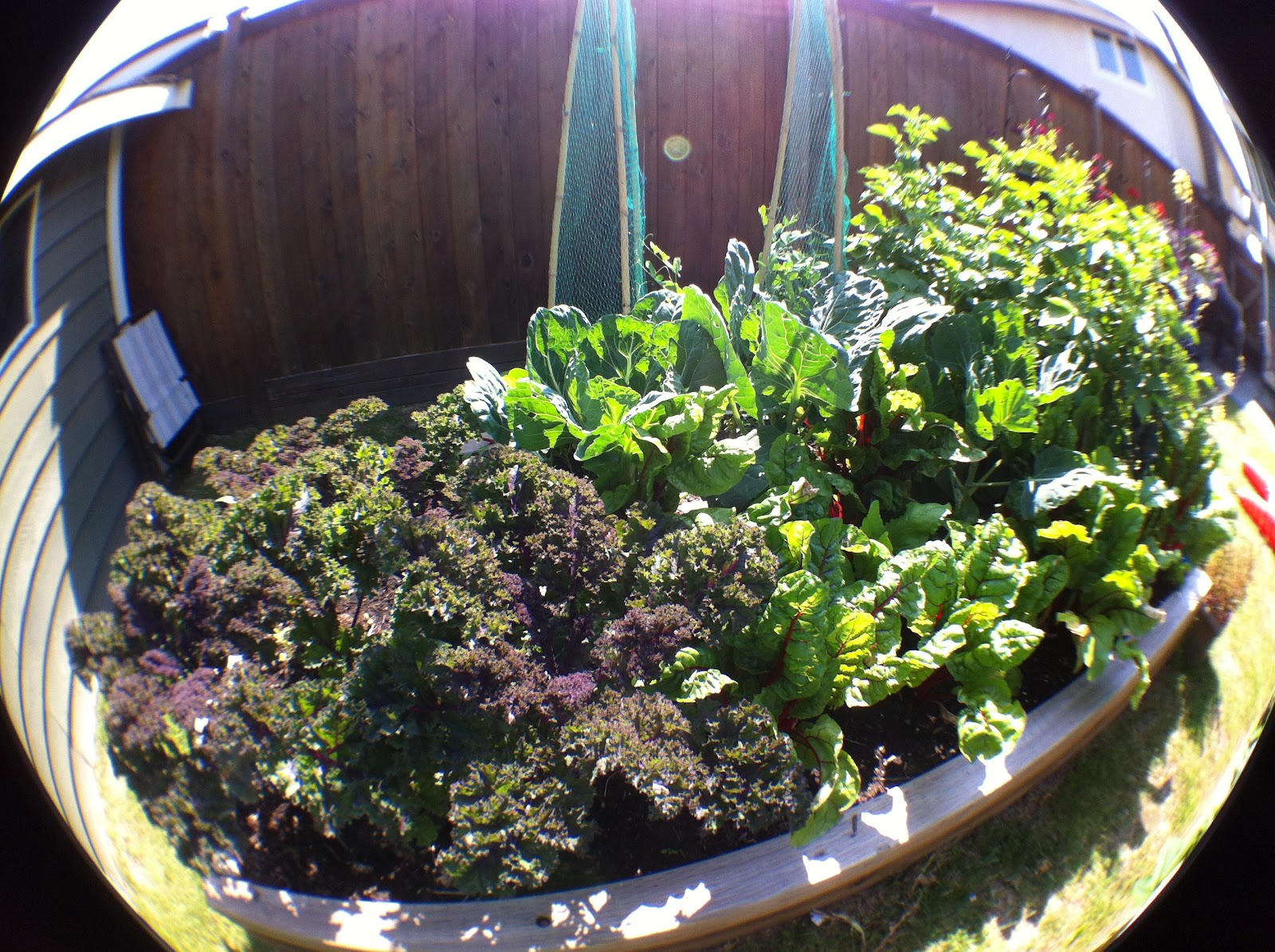
One of the raised beds in mid July.

After following some urban farming blogs I am starting to get the idea that I need to keep a journal of the season to remember what grew well, what didn't do well and why, any problems I encountered and any changes for next year. So that is what I hope to do with this post!

This is what we gave to our neighbours several times throughout the season. 

This year, for the first time, I grew almost everything from seed, and with a few exceptions this went well. I grew the following:
pumpkins
zucchinis
carrots
cucumbers
radishes
tomatoes (two kinds)
swiss chard
brussels sprouts
kale
spinach
lettuce
beets
peas
green beans
potatoes (seed potatoes from last year in soil)
cilantro*
basil*
strawberries*
chives (from previous years)
green onions (from previous years)
raspberries*
blueberries*
*not from seed

Some of the seed packets I used.

One of the things I loved about growing my plants from seed is that it was immensely satisfying watching each and every plant sprout and grow taller and stronger. My daughters and I would check on them daily and talk about what the seeds looked like, perhaps why some sprout sooner than others, and why some didn't sprout at all. We had great conversations about optimal growing conditions, and what happened when a section of seeds and seedlings were overwatered or didn't get enough light. It was an amazing learning opportunity for all of us to see the seedlings, which all looked pretty much the same as initial sprouts, begin to differentiate into the various plants, and we had fun trying to identify them without looking at the labels on the pots.

My wee babies, I mean seedlings.

The other thing I loved about growing from seeds is that this time I really felt like they were my plants. In fact, they were like my children and I felt pride and joy as they grew stronger and began to yield food for us. Conversely, I felt sad when some died because I planted them outside a little too soon and when some struggled after some heavy rain. I felt far more invested in them compared to the plants I have purchased.

In the foreground are the tomato plants, then peas, beans and squash in behind.

Next year, however, I will not grow herbs from seed. I have had difficulties with this in the past but thought I would try again. My basil never fully thrived and it had a very bitter taste throughout the season. Perhaps it didn't get hot enough for it at a crucial point in its growth (we had a chilly, rainy spring).  I don't seem to be able to kill my chives and green onions though. The chives were given to me from a neighbour a couple of years ago and my green onions were started years ago.

Shortly after planting the newbie plants. On the right side you 
can see the peas which should be much taller by this point. 
I planted them too late.

I believe that turning the soil in my garden beds with steer and chicken manure in early April really made the difference for healthy and full plants. Last year our neighbour built the first raised bed for us (we are so lucky) and I'm not sure the soil was the best quality, especially after seeing the difference this year when my neighbour added another raised bed to our yard but I bought the manure to add to both beds. I'm looking forward to using our own compost material next growing season. I wonder if I should still add some manure? Maybe I can get some from a local organic cattle farm?

Our compost bin, purchased from the City of Richmond.

So what will I do differently next year? In addition to not growing herbs from seed (unless anyone can give me some helpful tips), I will plant my peas about a month earlier, and I will plant my pumpkins a month later. I will also put much more thought into planning where to put each plant. I was careful with spacing this year (major problem last year) but really, growing brussels sprouts next door to kale really wasn't bright. My poor cucumbers, which really weren't happy from the get-go (must read more about them) became swallowed by first the zucchinis, then the pumpkins, which were threatening to strangle us in our sleep.


Tomatoes can be finicky here in our temperate west coast climate and once again they were a challenge for me. I usually buy my tomato plants already with tomatoes on them, but last year I had fun watching them develop from small three inch plants, so as mentioned previously, I tried them from seed. One of my tomato varieties was much happier than the other, at least for growing here in Steveston. The yellow grape tomatoes are ripening much more successfully than my larger red tomatoes. The larger tomato variety became stressed in mid August (or at least that's what my internet search results told me it means when the leaves flip over and curl) and I couldn't figure out why. Coincidentally the yellow grape ones are a heritage variety I picked up at the Foxglove Farm and Garden on Salt Spring Island, B.C.


The first harvest of tomatoes that made it into the house. 
We popped them into our mouths as fast as they ripened.

What other challenges did I face? My pumpkin leaves got a powdery mildew in August, which spread to the zucchinis. Other than slightly slowing down their growth and looking really ugly, I didn't notice any ill effects. The pumpkins themselves look great right now (fully ripe) and the zucchinis are still producing for us.

We have eight pumpkins in total this year.

I don't know if I will be able to sweet talk my neighbour into building us another raised bed next year (I'd like two more for my backyard and eventually some in the front yard), but regardless I want to plant more of the veggies my girls enjoyed eating this year: triple the number of peas (a huge favourite), beans and cucumbers; double the carrots, beets, spinach and radishes. I will half the number of zucchinis, chard and kale, mostly because we also participated in a local CSA: community supported agriculture  veggie pick up once a week and guess what they grew?!? Yup, each week we were inundated with zucchini (at one point I had over two dozen in my fridge), chard and kale from both gardens. Green smoothies anyone?!

The first week's veggie pick up from the Terra Nova Sharing Farm

Our garden continues now with the brussels sprouts, which I am looking forward to harvesting at Thanksgiving in October, and possibly for Christmas dinner again. This past Christmas morning I was so proud to cut the last stalk out of my garden and cook it up for my family.

Freshly harvested brussels sprouts on Christmas morning!

At a recent visit to the UBC Botanical Garden I purchased a winter gardening guide book which I am slowly working my way through; however I'm too late to do a winter garden this year. Hopefully next year I'll have plans in place mid to late summer to begin a winter garden. Perhaps it is a good idea to grow kale in the winter garden instead, along with some cabbage (which we missed this year) and other hardy veggies.

I'm sure I'm forgetting some other crucial bits of information I will need but this long enough and a lot to process.

Do you have a backyard garden? Do you container garden? What have you learned this year?